About Geoblocs
The operating system for trusted ecological restoration.
Every GEIA project is powered by Geoblocs—our evidence architecture that captures the complete story of a restoration project, from the first conversation to decades of monitoring.
By connecting ecological knowledge, legal documentation, monitoring and independent verification into a single living record, Geoblocs creates the truth layer that allows restoration projects to be understood, trusted and continuously improved.
Because better evidence creates better restoration.
Explore Projects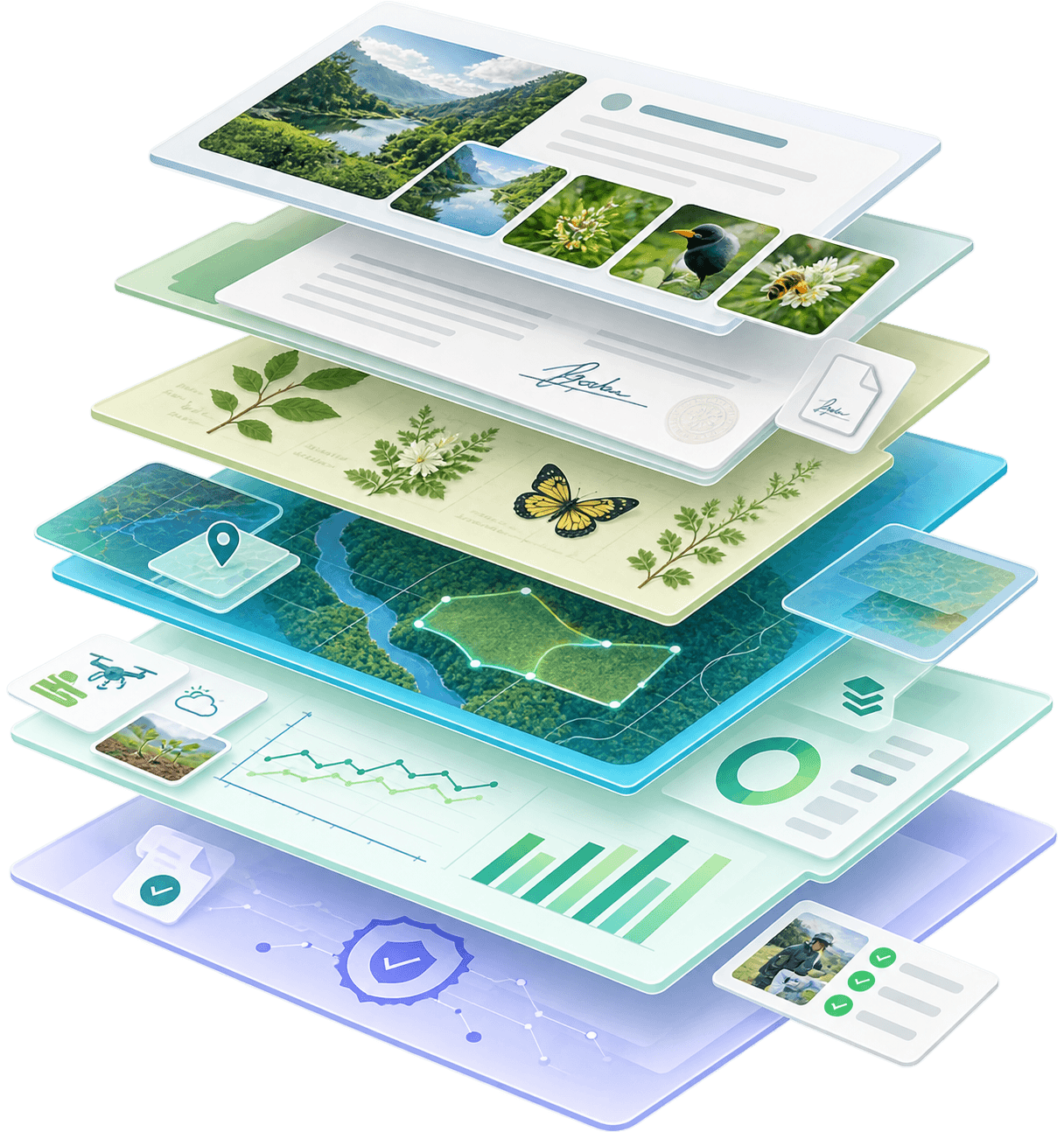
Nature restoration generates knowledge.
Too often, that knowledge becomes fragmented across reports, spreadsheets and organisations.
Geoblocs changes that.
Every Geobloc creates a living, AI-ready record that captures the complete story of an ecological restoration project—from the first conversation to decades of stewardship.
What is a Geobloc?
A Geobloc is an ecological knowledge system. It brings together every layer of a restoration project into a single, living source of truth.
Rather than storing documents in isolation, Geoblocs connect knowledge, evidence and verification into one structured system that grows alongside the project.
One Project. One Source of Truth.
Every Geobloc brings together the complete picture.
Project
The vision, objectives, people and story behind the restoration.
Evidence
Photographs, field observations, baseline surveys, monitoring and supporting documentation.
Ecology
Species, habitats, biodiversity, water, GIS and ecological data.
Governance
Land agreements, FPIC, permits, legislation and compliance.
Verification
Independent datasets, scientific review, monitoring and evidence provenance.
Intelligence
Structured knowledge that enables AI to generate reports, answer questions and surface evidence without losing context.
Built for the Entire Lifecycle
Ecological restoration doesn't end when the planting is complete. A Geobloc evolves with the project.
Every milestone becomes part of a permanent, transparent record that can continue to grow for decades.
- 1Planning
- 2Implementation
- 3Monitoring
- 4Reporting
- 5Verification
- 6Long-term stewardship
Why Geoblocs?
Ecological restoration is becoming increasingly complex. Projects must satisfy communities, landowners, regulators, investors, scientists and corporate partners. Each stakeholder needs trusted information.
Geoblocs creates a common source of truth that allows everyone to work from the same evidence.
Because better evidence leads to better decisions.
Designed for People. Ready for AI.
Artificial intelligence is changing how knowledge is accessed. But AI is only as reliable as the information behind it.
Geoblocs organises ecological knowledge into structured, verifiable evidence, allowing AI to generate reports, answer questions and support decision-making while remaining grounded in trusted sources.
Technology doesn't replace ecological expertise. It makes it more accessible.
Built in the Real World
Geoblocs wasn't developed in isolation. It has been shaped through real ecological restoration projects.
Woodlands
River catchments
Indigenous-led restoration
Community partnerships
Every project improves the platform. Every Geobloc strengthens the standard.
Our Vision
We believe every ecological restoration project deserves a trusted digital record. A place where knowledge is preserved. Evidence is connected. Claims are verifiable. Communities remain part of the story.
And future generations can understand not only what was restored, but how it was achieved.
This is the future Geoblocs is helping to build.
Explore Geoblocs in Action
Every GEIA project is powered by Geoblocs. Explore our projects to see how structured knowledge, transparent evidence and long-term stewardship come together in the real world.